Calendula: The garden healer you'll want to grow
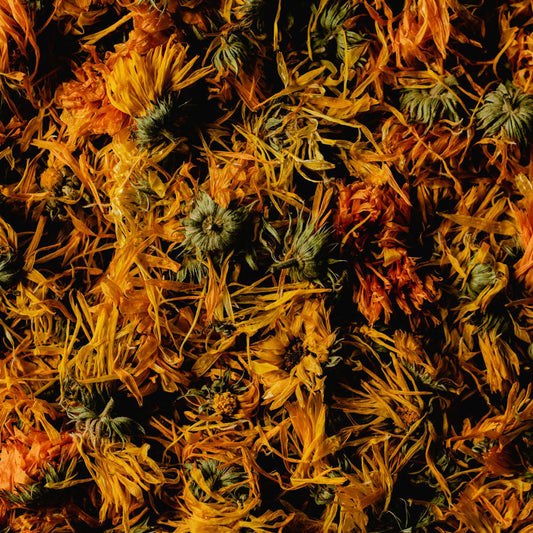
If there's one herb that earns its place in both the garden and the medicine cabinet, it's calendula. Those cheerful yellow and orange daisy-like flowers are more than a pretty face — the entire flower head is packed with medicinal goodness, right down to its sticky green base.
What makes Calendula so special?
Calendula is rich in vitamins A, B and C, but it's the plant's impressive range of medicinal properties that really sets it apart:
- Antibacterial, antifungal and antiviral
- Anti-inflammatory
- Vulnerary (actively supports wound healing)
- Antioxidant
- Lymphatic cleanser
- Febrifuge (helpful in managing fever)
- General tonic
How is Calendula used medicinally?
There are many ways to extract and apply its benefits:
- Teas — a simple way to take calendula internally as a tonic or lymphatic support
- Infused oils — flowers steeped in a carrier oil, forming the base of many topical preparations
- Tinctures — an alcohol-based extract for a more concentrated preparation
- Salves and lotions — widely used for skin complaints
- Compresses and baths — useful for applying calendula's anti-inflammatory and antibacterial properties directly to skin
- Douches — traditionally used for its antifungal properties
Be careful with your identification
Calendula is sometimes confused with marigold. While some marigolds share certain properties, they're not the same plant — if you're using calendula medicinally, make sure you have Calendula officinalis, with its distinctive bright yellow or orange blooms.
Growing your own
Calendula seeds may be planted directly in soil, or in trays and planted as seedlings later.
Here on the Mid North Coast of NSW, calendula thrives in autumn and spring. It just needs a sunny spot with well-drained soil and plenty of compost or manure. Some are able to grow it in winter in pots placed in sheltered areas.
Here’s a tip:
Keep cutting the flowers regularly. This will encourage the plant to keep producing blooms for longer, and give you a steady supply for your herbal preparations. Consider letting some of the flowers go to seed as well, so they can re-seed and grow new plants for you in the future.
This post is for educational purposes only and is not intended as medical advice. Please consult a qualified healthcare professional before using herbal preparations to treat any health condition.